Enter your player once. We highlight their row in every chart below. Free, no signup, and nothing here is trying to sell you a particular bat.
Your player
Fill in height and age above and your recommendation appears here.
Bat length
—
Bat weight drop
—
Glove size
—
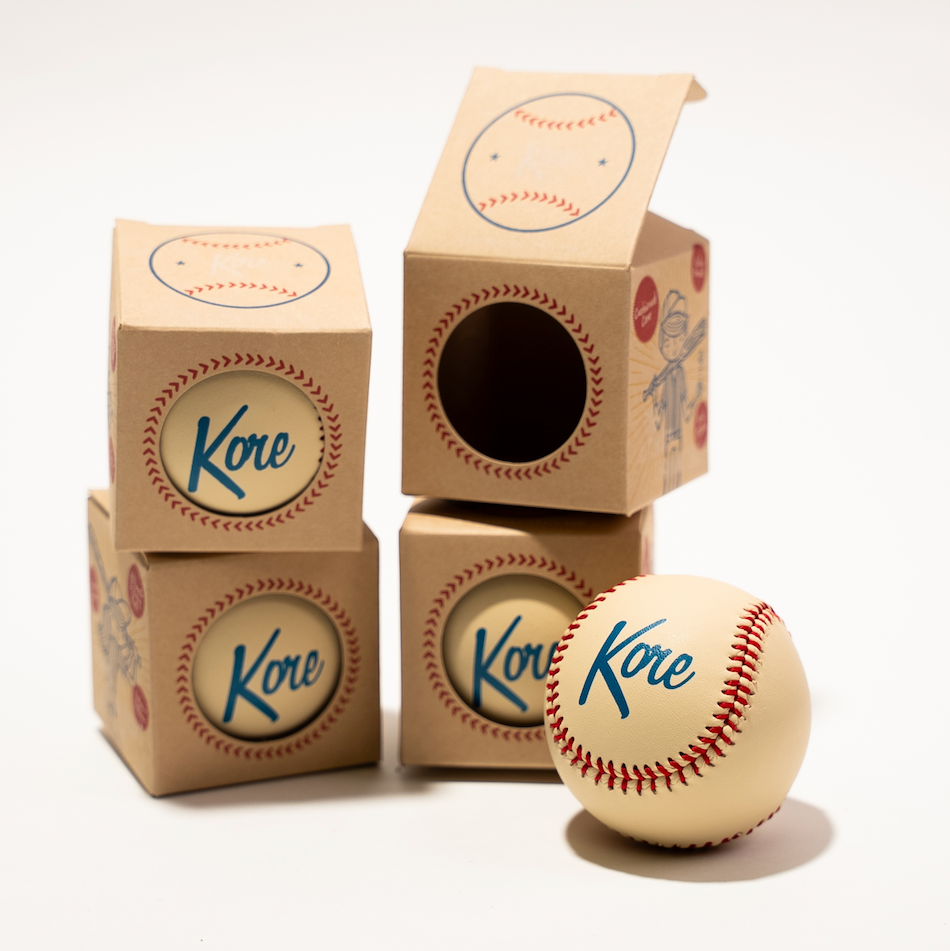
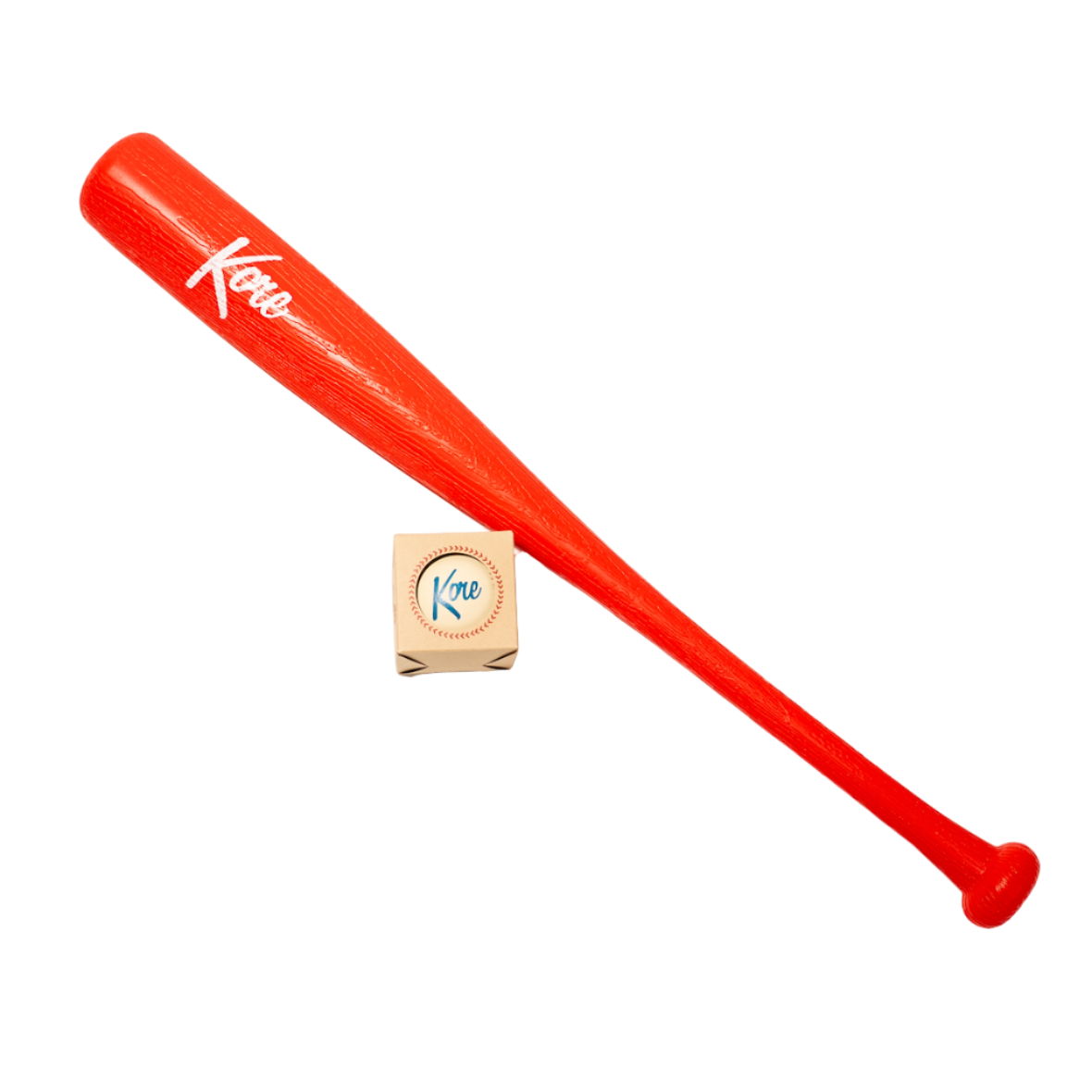
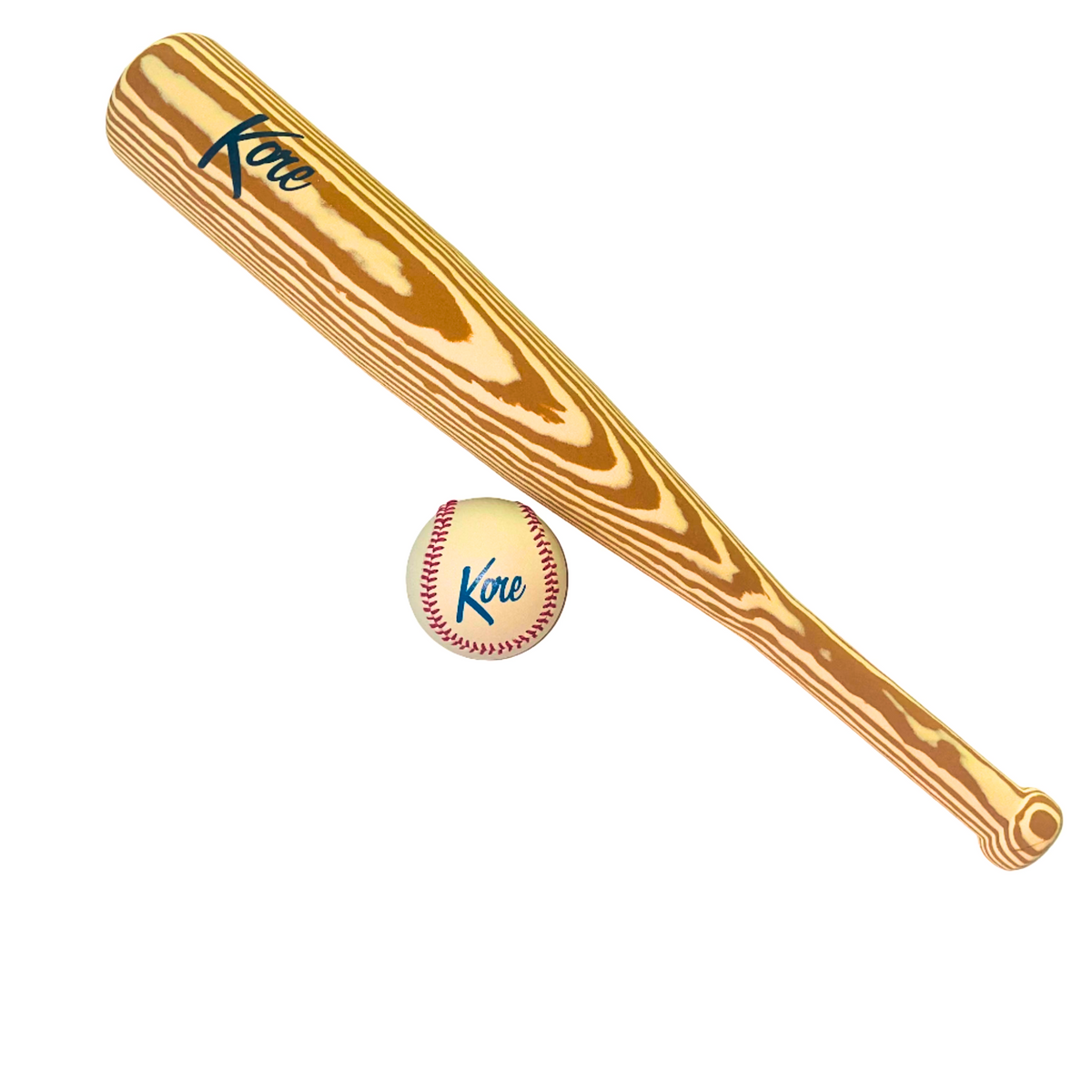
Got their size? Kore bats come in 21, 27 and 32 inch, each paired with a soft Kore Baseball so a kid can practise the swing anywhere without breaking anything. Browse the custom bats, or the Backyard Baseball Set if you need the whole kit. Buying for a birthday or the holidays? See baseball gifts.
Height is the strongest single predictor of bat length. Weight adjusts it: a stronger-than-average player can handle an extra inch, a lighter one should drop an inch and keep bat speed.
Player height
Bat length
Typical age
3'0" – 3'4"
26"
4 – 5
3'5" – 3'8"
27"
5 – 7
3'9" – 4'0"
28"
7 – 8
4'1" – 4'4"
29"
8 – 10
4'5" – 4'8"
30"
10 – 11
4'9" – 5'0"
31"
11 – 12
5'1" – 5'4"
32"
12 – 13
5'5" – 5'8"
33"
14 – 15
5'9" and up
34"
16+
Bat length, drop & certification by age
Drop is the bat's length in inches minus its weight in ounces. A −10 bat that is 30" long weighs 20 oz. Lower drop means a heavier bat. Certification is the stamp your league requires — buying the wrong one means an illegal bat on game day.
Age
Length
Drop
Certification
4 – 6 · Tee ball
24 – 26"
−10 to −13
Tee Ball stamp
7 – 8 · Coach pitch
26 – 28"
−10 to −12
USA Baseball
9 – 10 · Minors
28 – 29"
−8 to −10
USA or USSSA
11 – 12 · Majors
29 – 31"
−8 to −10
USA or USSSA
13 – 14 · Middle school
31 – 32"
−5 to −8
USSSA or BBCOR
15+ · High school
32 – 34"
−3
BBCOR
Glove size by age
Gloves are measured from the top of the index finger down the palm to the heel. Buy for the hand your player has now — an oversized glove they cannot close costs them every ground ball until they grow into it.
Age
Baseball
Fastpitch softball
4 – 6 · Tee ball
9 – 10.5"
9 – 10.5"
7 – 8
10 – 10.75"
10.5 – 11.5"
9 – 10
10.5 – 11.25"
11 – 11.75"
11 – 12
11 – 11.75"
11.5 – 12.25"
13 – 14
11.25 – 12"
12 – 12.75"
15+
11.5 – 12.75"
12 – 13.5"
Glove size by position
Once a player settles into a position around 11 or 12, the pattern matters as much as the length. Middle infielders want a shallow pocket they can empty fast; outfielders want length and depth.
Position
Size
Why
Second base / Shortstop
11.25 – 11.75"
Shallow pocket, fastest transfer
First base / Third base
11.5 – 13"
First base uses a mitt, 12 – 13"
Pitcher
11.75 – 12"
Closed web hides the grip
Outfield
12.25 – 13"
Length and depth for fly balls
Catcher
31 – 34"
Measured by circumference, not length
How to measure, step by step
The charts only work if the numbers going in are right. All three of these take under a minute.
How to measure a baseball glove
Glove sizes are not the same as clothing sizes, and the number stamped on the thumb is a measurement you can check yourself.
Lay the glove flat with the palm facing up.
Run a soft tape measure from the very top of the index finger, down the middle of the palm, to the centre of the heel.
Follow the curve of the leather rather than measuring straight across. That curve is why a glove measures bigger than it looks.
Round to the nearest quarter inch. That number is the glove size.
Catcher's mitts are the exception. Those are measured around the outside circumference, which is why the numbers jump to 31 to 34 inches.
How to size a baseball bat
Start with the height chart above, then confirm with two quick checks in the store or the garage:
The arm test. Stand the bat upright next to your player with the knob on the ground. The end of the barrel should reach roughly to the middle of their palm when their arm hangs straight down.
The tap test. Have them hold the bat straight out from their chest with one arm. If they can hold it steady for ten seconds, the weight is right. If the barrel dips, go lighter.
If the two tests disagree, believe the tap test. Bat speed beats bat mass at every youth age, and a bat a kid can actually get around on will produce more contact than a longer one they drag through the zone.
How to measure your player's height
Measure in the shoes or cleats they will actually be batting in, back against a wall, heels flat. Kids in this age range grow in bursts, so if they are close to the top of a height band and it is early in the season, size up rather than down.
What size does a 6, 7, 8, 9 or 10 year old need?
Age alone is a rough guide because kids the same age can be a foot apart in height. Use these as a starting point, then check against the height chart above.
What size bat and glove for a 5 or 6 year old
Bat 24 – 26" with a Tee Ball stamp, glove 9 – 10.5". At this age the priority is a glove small enough that they can actually squeeze it shut. A glove they cannot close is worse than no glove at all.
What size bat and glove for a 7 year old
Bat 26 – 28", glove 10 – 10.75" for baseball or 10.5 – 11.5" for fastpitch. Most 7 year olds are in coach pitch, which usually means a USA Baseball stamp.
What size bat and glove for an 8 year old
Bat 26 – 28" with a −10 to −12 drop, glove 10 – 10.75" for baseball or 10.5 – 11.5" for fastpitch. This is the age where the height chart starts mattering more than the age chart, because 8 year olds vary enormously.
What size bat and glove for a 9 year old
Bat 28 – 29", glove 10.5 – 11.25" for baseball or 11 – 11.75" for fastpitch. Check whether your league wants a USA or USSSA stamp before you buy — this is where the two diverge.
What size bat and glove for a 10 year old
Bat 28 – 29", glove 10.5 – 11.25" for baseball or 11 – 11.75" for fastpitch. Around now players start settling into a position, so the position chart above becomes more useful than the age chart.
What size bat and glove for an 11 or 12 year old
Bat 29 – 31", glove 11 – 11.75" for baseball or 11.5 – 12.25" for fastpitch. Buy for the position now. An outfielder and a shortstop want genuinely different gloves at this age.
How to break in a new baseball glove
A brand new glove is a board. It will not close, it will not hold a ball, and a kid trying to play with one will drop everything for a month. Breaking it in properly takes about a week.
The method that actually works
Play catch with it. This is genuinely the whole answer. Thirty minutes a day for a week does more than any product you can buy. The leather softens where it needs to soften, in the shape of the hand using it.
Work the pocket by hand. Fold it closed, bend it backwards, twist it. Push your thumb into the pocket and roll it around. Do this while watching TV.
Ball and band overnight. Put a ball in the pocket, close the glove around it and wrap it with two or three rubber bands or a belt. Leave it overnight, every night, for the first week.
A little conditioner, sparingly. A thin coat of glove conditioner or shaving cream with lanolin, worked in with a cloth. Less than you think. Too much makes the leather heavy and slow.
Do not use heat. Not the oven, not the microwave, not the dashboard of a hot car. It feels like it works because the leather goes soft immediately, but heat dries out the oils that keep leather flexible. The glove gets brittle, the laces crack, and it falls apart in a season. The same goes for running it over with the car — you are crushing the padding, not conditioning it.
How to break in a glove overnight
You cannot fully break in a glove overnight, and anyone telling you otherwise is selling something. What you can do the night before a first game: work the pocket hard by hand for fifteen minutes, apply a very thin coat of conditioner, put a ball in the pocket, wrap it tight with some glove wrap you can find on amazon, and sleep on it. It will be usable. It will not be broken in. Keep playing catch with it.
How long does it take?
About a week of daily catch for a youth glove, longer for a stiffer adult glove. Buy the glove a few weeks before the season starts rather than the day before, and the whole problem takes care of itself.
A soft ball is genuinely useful here, because the fastest way to break in a glove is volume of reps and a Kore Baseball lets you get them in a driveway or a hallway instead of waiting for a field.
Common questions
What happens if the bat is too big?
The player drags it through the zone, gets late on everything, and starts pulling off the ball to compensate. Too heavy is a much bigger problem than too light. If you are between sizes, go shorter and lighter.
What does drop 10 mean on a bat?
Drop is the length in inches minus the weight in ounces. A 30 inch bat that weighs 20 ounces is a −10. A bigger drop number means a lighter bat for its length. Youth leagues generally run −8 to −13, while high school BBCOR bats are all −3.
What is the difference between USA and USSSA bats?
They are two different certification standards, and they are not interchangeable. USA Baseball bats are built to perform closer to wood. USSSA bats allow more trampoline effect off the barrel. Your league requires one or the other, and an uncertified bat will be pulled at the plate. Check with your league before buying.
Should I buy a bigger glove so they grow into it?
No. This is the most common and most expensive mistake. A glove a player cannot close means every catch is a two-hand catch at best and a drop at worst, and it kills their confidence for the season or two it takes them to grow into it. Buy for the hand they have now.
Do softball players need a different glove?
Yes. Fastpitch gloves run roughly half an inch to an inch larger at the same age because the ball is bigger, and they usually have a deeper pocket. Fastpitch catcher's mitts also run larger, typically 32.5 to 34.5 inches.
Can my player use a baseball bat for softball?
No. Baseball and fastpitch bats have different barrel diameters and different certification stamps, and leagues enforce it. Buy for the sport they are actually playing.
How often should we replace the bat?
Whenever they outgrow it, which for a growing kid is often every season or two. Watch for the tap test failing in the other direction — if the bat suddenly feels like a toy in their hands, they have outgrown it and are leaving distance on the table.
Go true to your player's everyday shoe size, or a half size up if they're mid-growth-spurt. Molded rubber for almost all youth leagues — metal spikes are typically not permitted until 13U, and the rule varies league to league, so check yours before you buy.
Buy early
Gear bought three weeks before opening day gets broken in properly. Gear bought the night before does not. This one decision solves more problems than any chart on this page.
Let them hold it
Whatever the chart says, put the bat in their hands before you commit. A kid who likes how a bat feels will swing it with confidence, and confidence at this age is worth more than an inch either way.
Shopping for someone else? Our baseball gifts page sorts everything by price and age, from an $8.99 ball up to the full backyard set.
Sizing ranges are consolidated from published industry guides and reflect typical starting points, not league rules. Certification requirements change — confirm the current stamp with your league before buying a bat.
Honestly, one of the coolest things I’ve ever bough baseball wise. My daughter loves the baseballs and softballs because of how soft they are. And the baseball has become my new fidget toy at work - everyone then wants to play catch. Great products overall from bat to bases to of course that Kore baseball (and softball)
We’ve really enjoyed using them. Love the texture and safeness of them as we have a small backyard but it’s long enough for my 5 year old to hit some dingers. Also I no longer have to turn in fear at the hard plastic wiffle balls flying by my head. The red bat (can’t remember the length) is perfect for him right now and close to his actual bat. Happy to have found these